

“Fun” is a very subjective term. For different riders, “fun” might be hooning as fast as possible down the worst terrain imaginable, tasting blood during a technical XCO race, popping and flicking down immaculately built flow trails, or just pedalling out of your door and up into the hills for the day to admire the views. Everyone will have their own view on what makes mountain biking “fun” for them, and that diversity is one of the coolest parts of this sport.
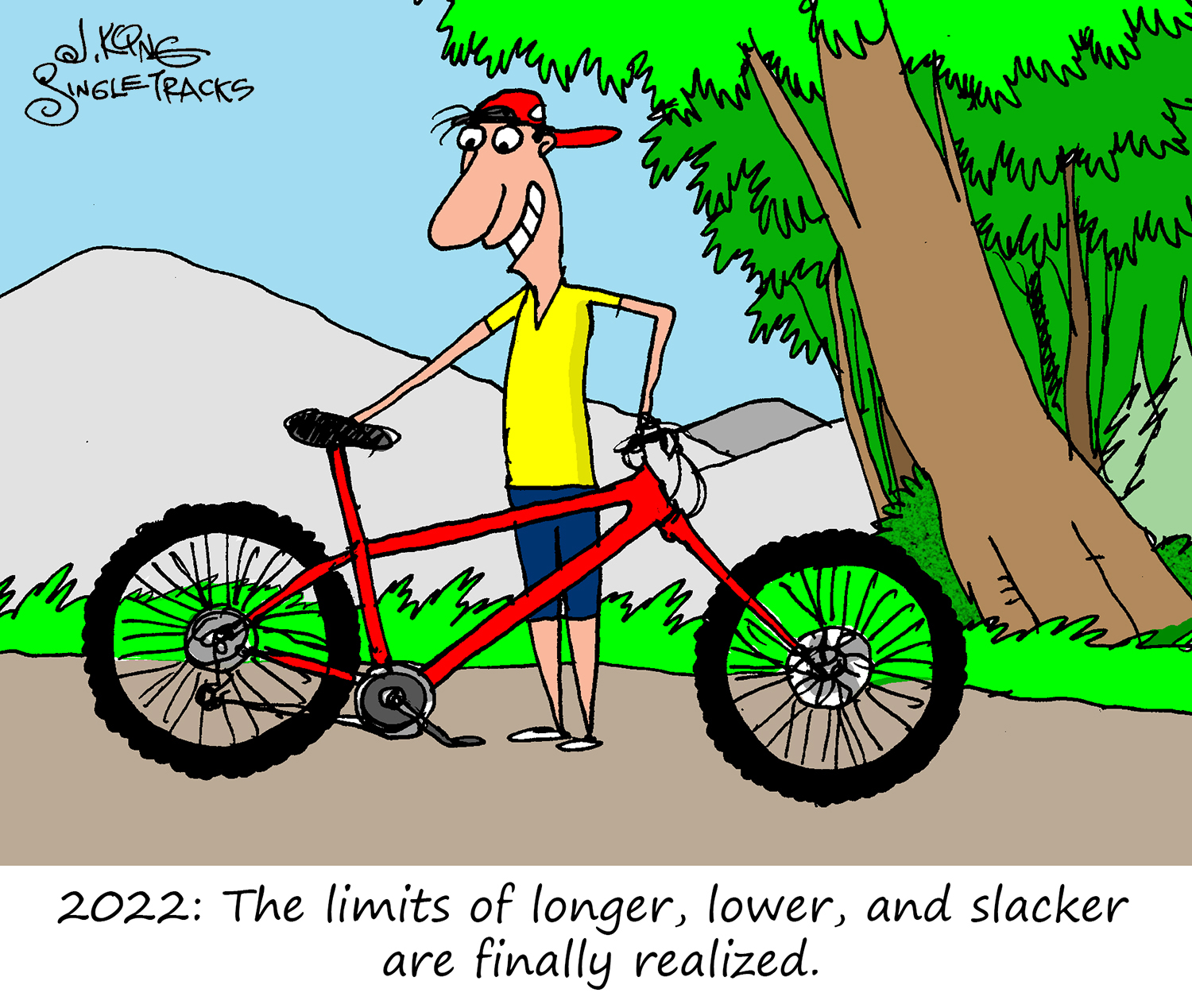
That last statement is why I’ve begun to take some issue with the bike industry’s drive towards longer, lower and slacker bikes over the past few years. At its root I think this is probably driven by the increasing demands placed on racers and their bikes, as courses become increasingly technical. To ride rougher, steeper terrain faster, you need a more stable bike, which has generally been facilitated by slacker head angles, lower bottom brackets and longer reaches. Much like the internal headset cable routing I’ve previously discussed, I feel this may be a case of the needs of the 1% dictating what the rest of us 99% get to ride…

Bike geometry is far too complex a subject to break down here – although if you’re really interested, the resources are out there for you to learn – but for the sake of simplicity I’m just going to concern myself with what is arguably the most important number for MTB sizing: reach.
For a given ‘size’, bike reach measurements have grown year-on-year. If we take the venerable Specialized Stumpjumper as an example, a size medium frame in 2008 had a reach of 405 mm. By the mid-2010s, this figure had jumped to 425 mm, and the latest 2021 model year Stumpjumper in a size S3 (medium equivalent) has a reach of 450 mm. For another example we can look at the Evil Following – another quintessential ‘trail bike’. A medium Following V1, released in 2015, had a reach of 419 mm. The 2018 Following MB bumped this up to 435 mm, and when Evil released the Following V3 in 2020, reach had grown significantly to 454 mm.
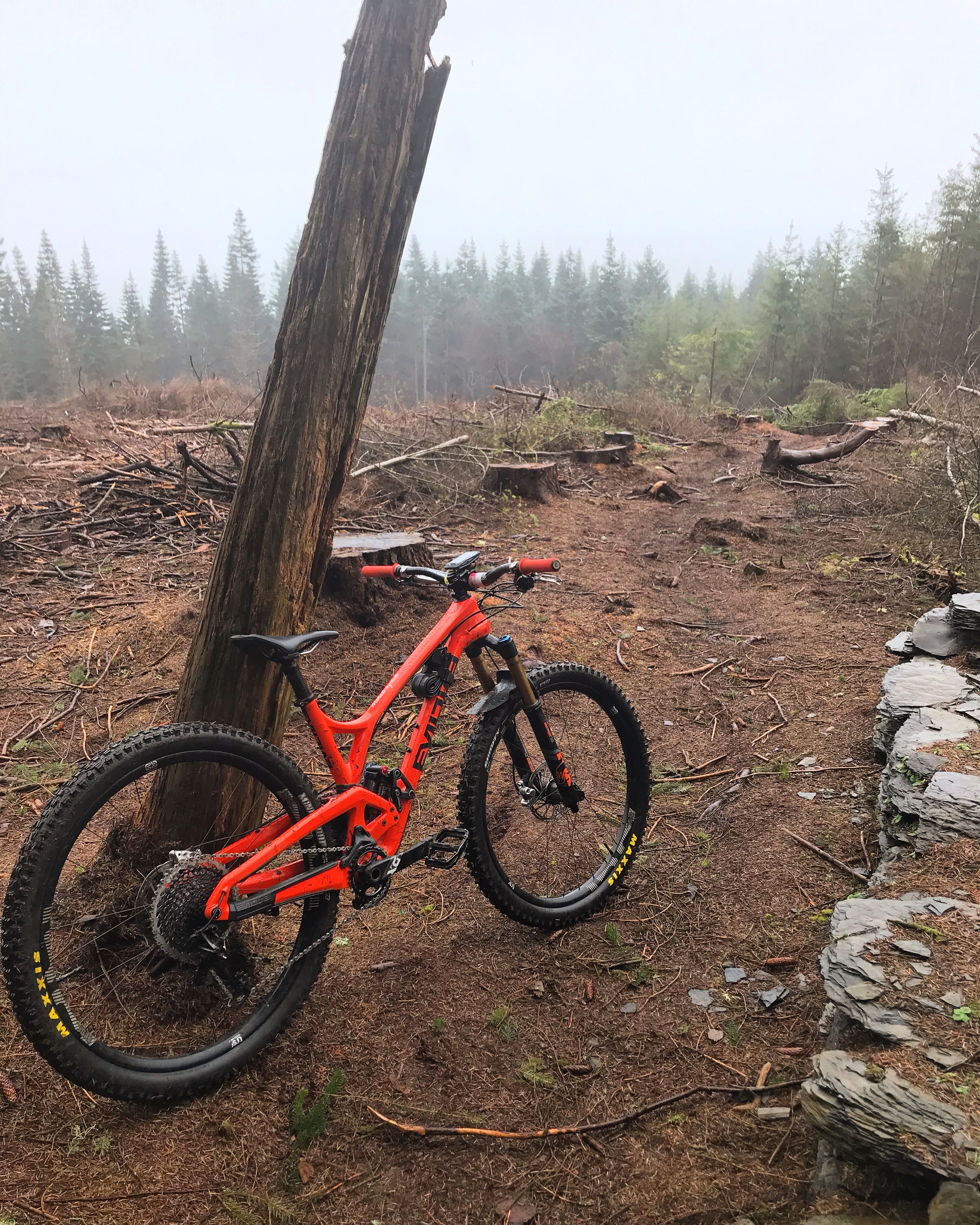
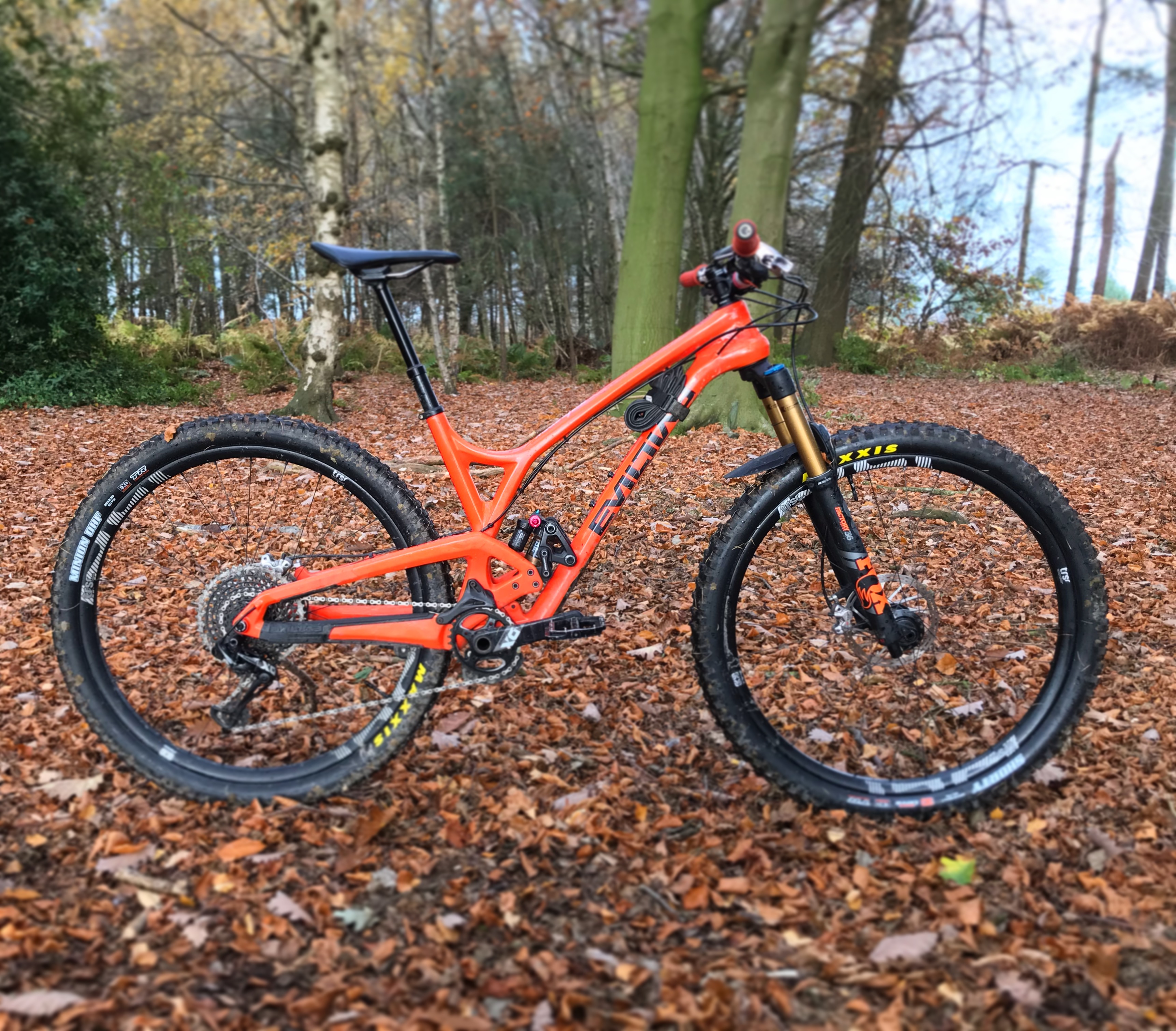
The second example is relevant because I’ve owned two of them. When I got my Following MB, I remember being absolutely in love with it – the thing felt like it was an extension of my body, and I could do anything on it. I think to this day it’s probably the bike I most regret moving on. After riding an Offering for a bit, I ended up on a Following V3 – obviously based on past experiences with Evil, I put myself on a medium size frame once again. Although it was clearly a fantastic, capable bike, I never quite gelled with it in the same way as I did the MB.
Thinking back to bikes I’ve owned, and how they’ve changed, triggered the scientific part of my mind, so I decided to pull together some data. I compiled front and rear suspension travel, and frame reach and stack for all (bar one or two) of the mountain bikes I’ve owned or ridden for a good period of time. For hardtails, I calculated the figures at 20% sag. The results weren’t entirely unexpected, but were interesting nonetheless…


I sat pretty comfortable in the 425 – 435 mm reach range for several bikes, before ending up on progressively longer and longer models. I arrived at Peak Reach on the Evil Insurgent V2, which had a whopping 474 mm reach on a size medium. This bike was the first real wake-up call for me – it was “my size” according to the sizing chart, and I’d always been on medium Evil frames – but I could never get comfortable on it. It felt like a real barge, even with a stubby 35mm stem. Even on fast, straight downhill tracks – what should be the bike’s bread and butter, really – I found it a real handful, struggling to get my weight far enough forward to give good front wheel grip, and it was borderline impossible to get round downhill switchbacks.
The second revelation came when I threw a leg over my partner’s 2019 Rocky Mountain Thunderbolt BC. It has the shortest reach of any bike I’ve ever ridden, at only 414 mm in the most neutral Ride 9 setting. I found climbing to be awkward on the Thunderbolt – the cockpit felt quite cramped and the slack effective seat angle coupled with a ton of exposed seatpost had me way over the back end when seated. The short reach also made the bike feel a bit nervous when tipped downhill – there wasn’t quite enough bike in front of me to stop me feeling like I was going to go over the bars. But despite this, the bike was fun. Really fun. On mellower terrain it felt light and fast, nimble and easy to place where I wanted it – almost like riding my dirt jumper on natural trails. Yes, it was clearly too small for me, but it certainly opened my eyes to the potential benefits of sizing down, and helped figure out where my lower reach limit was.
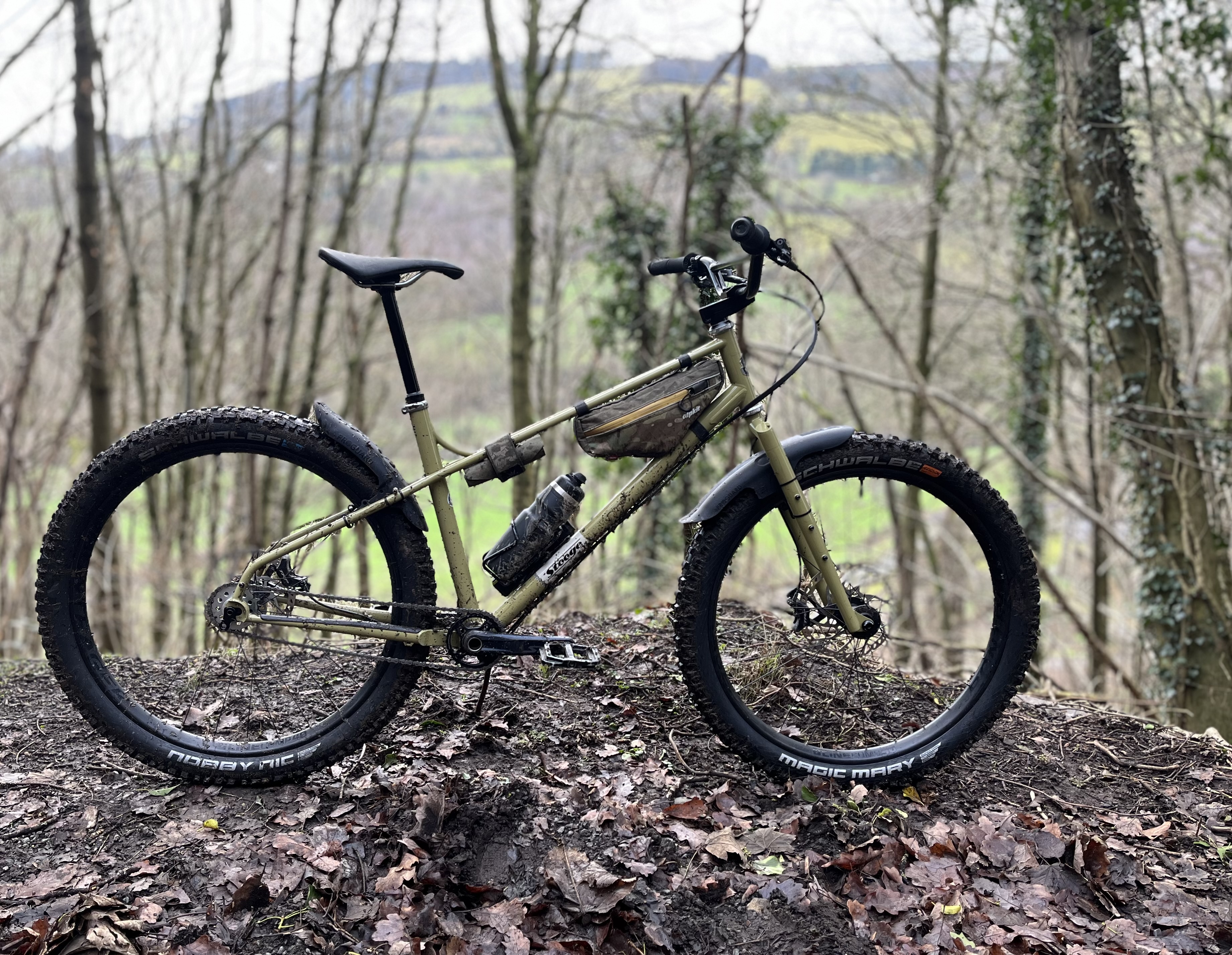
And then came the Stooge Mk6. It’s a very different bike from those I’ve ridden before in that it has no suspension at all, but despite that, I immediately felt at home on it. There wasn’t really an acclimatisation or adaptation period, the bike just clicked with me. It felt roomy enough without being overly rangy, I felt fully in control, it climbed well, it descended far better than it had any right to… I couldn’t fault it. Out of curiosity I checked the geometry chart – reach sat at 438 mm, practically the same as my all-time favourite Following MB.
Could it be that a 435 – 440 mm reach is just my magic number? Is that even a thing?
I don’t generally believe in using basic formulas to size or fit bikes, so I would certainly take such talk with a pinch of salt. There’s far too much variation in the dimensions and proportions of Human bodies, strengths and weaknesses, flexibility, past injuries… no two people are the same. So when I came across MTB coach Lee McCormack‘s formula for ideal MTB reach, I was sceptical to say the least.
Height (cm) x 2.45 = Recommended Reach (Min)
Height (cm) x 2.5 = Recommended Reach (Neutral)
Height (cm) x 2.55 = Recommended Reach (Max)
In my case, that would be…
171 cm x 2.45 = 419 mm
171 cm x 2.5 = 427.5 mm
171 cm x 2.55 = 436 mm
Is it possible that Lee is actually onto something here? Irrespective of head angle or any other geometry parameter, all of my top 3 all-time favourite and MOST FUN BIKES have been around the upper half of that range, regardless of suspension travel or wheel size (Santa Cruz 5010 V2, Evil Following MB, Stooge Mk6). Whether or not it’s coincidence that my preference pretty much lines up with his formula, it does seem to work for me.

I’m not against the general advancement in modern MTB geometry – bikes now are definitely more capable and safer, and inherently more fun, than they were 10-15 years ago. Smaller frame sizes still benefit from all of the other advancements – slacker head angles, steeper seat angles, shorter stems, wider bars, etc. But as reach numbers have grown, and today’s small frames fit like yesteryear’s large models, I think a lot of people are ending up on bikes that are simply too large for them. Most people aren’t smashing down World Cup DH tracks – they’re riding their backyard singletrack or their nearest trail centre. Statistically, the best-selling frame size is a large, and large bikes are often huge these days. Would the average person be better served on a shorter, more playful bike?
I wouldn’t advise anyone blindly follow Lee’s math, but it might offer a nice starting point. What I would advise is that anyone in the market for a new bike should use the manufacturer’s sizing chart solely as a basic starting point, and go and demo some bikes. Get a feel for what geometry figures work for you, for 99% of your riding. Also think back to bikes you may have ridden in the past, and how they felt. Get a sense of what you have the MOST FUN on. If that means that you want a massive reach to give you the stability you need to win enduro races, then go for it! But if you feel best popping around your local trails on a size small frame, regardless of your height, then that’s where you should be putting your hard-earned cash.
Helpful sizing & fit resources:
- Geometry Geeks (Extensive database of geometry for (most) bikes)
- Mad Scientist MTB Sagged Hardtail Geometry Calculator
- Yojimg Stem Calculator
- Joy Of Bike – SIZING MY NEXT MOUNTAIN BIKE (YouTube)
UPDATED 15/5/25: Charts now have geo figures for two new bikes. I’m probably due to revisit this topic at some point soon…


One response to “Thoughts on Sizing Bikes for Maximum Fun…”
[…] could definitely ride a medium at my height (I’m right on the cusp of the two sizes), but as previously discussed, I find smaller bikes more fun. I’m just running the stock headset that comes with the frame. […]
LikeLike